Trusted Tile Craftsmen Mississauga
Choose professional Mississauga tile experts who carefully evaluate substrates (including flatness, deflection, moisture per ANSI/TCNA), select proper primers, membranes (A118.10/A118.12), and mortars, and follow EJ171 movement joints. You can expect laser-layout grids, calibrated rectified tile, proper trowel notch and ≥95% coverage, verified lippage within TCNA tolerances, and waterproofing photos. They will coordinate website materials to usage (porcelain with DCOF ≥0.42, PEI 4-5), offer warranties tied to manufacturer systems, and keep clean, safe installation areas-next, discover how to validate performance with real project evidence.
Important Findings
- Certified technicians adhere to TCNA/ANSI standards, ensuring proper substrate preparation, moisture level assessment, and movement accommodation joints to prevent installation failures.
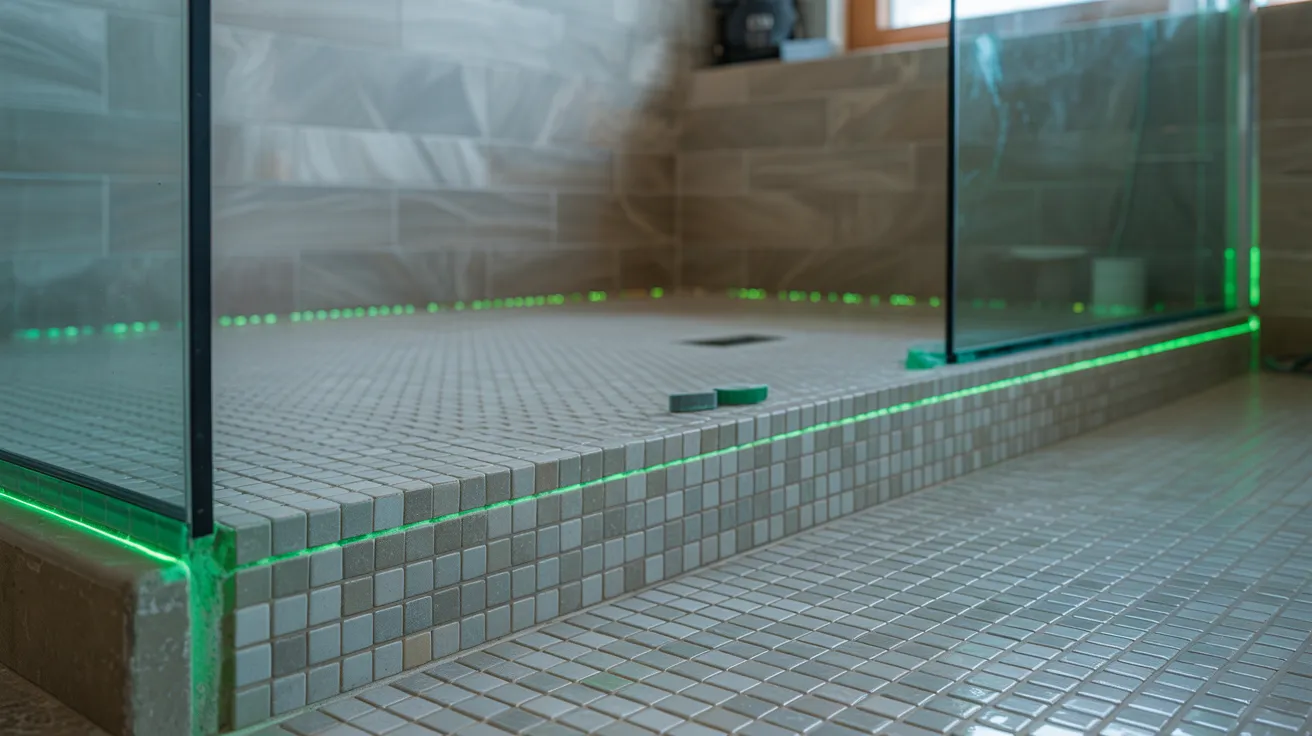
- Our regional showcase of before/after images displays perfect grout lines, controlled lippage, thorough waterproofing, and exact layouts throughout various Mississauga projects.
- Material guidelines for all spaces: porcelain with DCOF ≥ 0.42, PEI 4-5 within kitchens, epoxy grout in wet zones, and acoustic underlay materials where required.
- Comprehensive system documentation covers primers, membranes (A118.10/A118.12), mortars, trowel specifications, plus coverage calculations and cure duration details tied to manufacturer guarantees.
- Safe and clean work areas: we utilize dust control measures, careful surface safeguarding, detailed work schedules, and courteous interaction to ensure minimal disruption during installation work.
The Importance of Professional Tile Installation
While DIY guides might make tiling appear straightforward, expert installation guarantees your tile project adheres to industry specifications and performs as intended. You benefit from thorough surface analysis, flatness adjustments, and moisture checks that avoid bond failures. Professional tilers select the appropriate primers, membranes, and mortars, then achieve proper trowel notch, coverage, and control joint installation following TCNA and ANSI specifications. They use laser measuring to align grout joints and optimize sightlines, maintaining design appeal.
You'll be provided with specified curing periods, expansion allowances, and deflection standards, which help prevent surface issues and uneven edges. Professional installers confirm installation angles, boundary spaces, and connection details for safe, compliant installations. They additionally offer installation warranties linked to approved products and system specifications, safeguarding your project. In summary, exact procedures, validated processes, and accountable workmanship deliver long-lasting, cleanable, and consistent finishes.
Finding the Right Tile for Every Space
It's essential to match tile specs to spatial needs using defined performance standards. In bathroom spaces, opt for moisture-proof materials with minimal water absorption (0.5% or less porosity), anti-slip rating rated R10 or higher or minimum DCOF of 0.42; for kitchens, emphasize wear-resistant porcelain (PEI class 4-5) and stain-repelling finishes. In bedroom spaces, choose comfortable, sound-dampening assemblies such as cork-underlaid porcelain or LVT solutions with noise-reduction underlayment satisfying acoustic rating requirements.
Humidity-Resistant Bathroom Selections
Given that bathrooms face continuous humidity and direct water exposure, make sure to choose tiles with reduced water absorption, certified slip resistance, and demonstrated chemical durability. Specify porcelain tiles with water absorption rates of ≤0.5% (following) ISO 10545-3 and complying with COF/DCOF requirements (ANSI A326.3). When it comes to shower floors, install small-format mosaics to ensure grout traction and effective slope conformity; for wall applications, choose precision-cut porcelain or glazed ceramic tiles with vitreous composition.
Install waterproof membranes following ANSI A118.10 under tile in wet zones, and utilize epoxy grout (ANSI A118.3) for superior stain and moisture resistance. Treat junctions with sealed movement joints (TCNA EJ171). Ensure correctly sloped shower pans (¼ in. per foot) and fully keyed, polymer-modified thinset (ANSI A118.4/15). Enhance moisture control with well-ventilated showerheads and a properly rated exhaust fan to achieve ACH targets.
Long-lasting Kitchen Surfaces
Select tiles that are resistant to high traffic, dropped cookware, oils, and thermal shock. In a working kitchen, opt for porcelain tile rated PEI 4-5 and ANSI A137.1 compliant. Choose through-body porcelain for concealing damage and ≥0.42 DCOF for anti-slip properties. For counters or islands near stone countertops, confirm heat resistance and thermal expansion compatibility; select tiles with low water absorption (≤0.5%) and high Mohs hardness. Use rectified edges for narrow joints and epoxy grout for protection from staining and acid damage. For backsplashes, opt for glazed porcelain with Class A stain ratings. Verify R11/R12 textures in prep zones, and use uncoupling membranes over plywood or concrete to prevent cracking. Seal natural stone only if used as accents, and specify color-body trims for seamless terminations.
Comfortable, Hushed Bedroom Tiles
Although bedrooms need comfort and quiet, tile can offer both when you select the right construction. Pick porcelain or engineered stone with a matte finish (matte ≤10 GU) to minimize brightness and visual disturbance. Prioritize formats with rectified edges to reduce joints (2-3 mm) and minimize grout lines. For better sound control, place over a high-density underlayment (≥20 dB ΔLw) and decoupling membrane meeting ANSI A118.12 to curb impact sound and control movement.
Select appropriate slip resistance when walking barefoot: DCOF ≥0.42 (wet) meets requirements. Install warmth-providing surfaces featuring texture for comfortable feel and temperature. Select low-emission setting materials that meet ANSI A118 standards. Finish with adaptable, matching grout and movement joints per EJ171 to eliminate sounds and preserve a silent space.
Surface Prep and Moisture Control
Before you start laying a single tile, verify the surface meets moisture, soundness, and flatness specifications as specified in ANSI A108 and TCNA guidelines. Evaluate deflection, verifying L/360 for ceramic and L/720 for stone. Conduct surface leveling to achieve the specified plane: no more than 1/8 inch in 10 feet for large-format tile, as specified by TCNA. Abrade contaminants; remove compromised areas; repair with polymer-modified compounds suitable for use with your setting material.
Assess moisture vapor emission and RH according to ASTM F1869 or F2170. When measurements surpass specified thresholds, apply vapor barriers or vapor-retarding membranes as required. In wet areas, use ANSI A118.10 waterproofing; for crack isolation, select ANSI A118.12 isolation membranes. Maintain movement joints per TCNA EJ171. Install compatible mortars, primers, and sealants across the installation.
Expert Layout, Cutting, and Alignment
Set up reference lines and control points to lock in layout accuracy, then dry-fit to confirm module, joint width, and pattern repeat. Create perpendicular chalk lines, check squareness with 3-4-5 triangulation or laser guides, and center the field to equalize perimeter cuts. Use calibrated edge spacers to maintain uniform joints and adhere to ANSI A108 tolerances. Mark critical edges, undercuts, and transitions before laying adhesive. Perform cuts with a tile scorer for ceramics, a wet saw with diamond blade for porcelain and stone, and a core bit for penetrations; ease edges with a diamond hand pad.
Keep tile height differences within ISO 13007 limits by observing surface levelness and adhesive application. Position from key sight points, back-butter as required, and align pattern flow through thresholds and focal walls.
Grout Selection, Sealing, and Longevity
Although tile determines the surface look, grout significantly impacts functionality, sanitation, and lifespan, therefore you should coordinate grout type to foot traffic, joint dimensions, and substrate movement according to ANSI A108/A118 and TCNA EJ171. Choose sanded grout for wider joints of 1/8 inch or more, unsanded for glass or narrow joints, and high-performance cementitious with polymer for moderate duty applications. For moisture-prone zones, industrial kitchen spaces, and high-risk staining zones, specify epoxy grout for minimal absorption, chemical durability, and lasting color. Always maintain movement joints as detailed in EJ171 to minimize crack formation.
Once curing is complete, treat cementitious grout with a penetrating sealer to minimize moisture and oil infiltration; don't seal epoxy grout. Test for moisture emission to prevent efflorescence. Maintain with pH-neutral cleaners; only use acids when recommended. Perform yearly inspections, touch up sealer in well-traveled zones, and immediately repair damaged joints to extend service life.
Straightforward Pricing and Project Timeframes
Because scopes vary between tile backsplash renovations to comprehensive mortar-bed installations, we publish itemized pricing aligned with defined work scopes, material classes, and TCNA/ANSI installation standards, coupling it with a detailed project timeline and sequential timeline. You obtain fixed price estimates with inclusions, excluded items, itemized rates, and allowances clearly specified. We map project phases-demo, substrate preparation, waterproofing, tile setting, grout, cure time, and punch list-into phased scheduling, indicating schedule float, sequential requirements, and inspection hold points.
We carefully sequence tasks to satisfy manufacturer cure times and TCNA movement-joint requirements, eliminating compressions that risk failure. Lead times for tile, membranes, and trim are listed, with contingency paths for substitutions. We include project timelines, completion checkpoints, and modification points. If scope shifts, we re-baseline cost and time transparently, before proceeding.
Tidy Workspaces and Respectful Service
Your schedule and cost certainty are reflected in how we manage the site each day: we maintain OSHA-compliant housekeeping, use HEPA-filtered dust extraction at source, and partition work zones with zipper barriers and negative air when required. We safeguard adjacent finishes with Ram Board, poly sheeting, and edge guards, and we organize materials to enhance workplace organization and movement. Our daily cleaning procedures eliminate debris; cables and hoses are organized with cable trays to eliminate trip hazards.
We communicate clearly about start and end times, utility requirements, and access arrangements, ensuring clear communication throughout the process. Workers adhere to safety guidelines wearing proper protective equipment, clearly marking moisture zones, and installing safety signage in accordance with WHMIS and location guidelines. We properly contain debris, seal it securely, and maintain consistent disposal, keeping your property safe and functional.
Local Work Examples and Client Feedback
Looking to verify how our work performs in actual Mississauga residential and commercial spaces? Explore our completed works to examine installation excellence, grout precision, and substrate preparation. In our portfolio showcases, you'll find ANSI A108-compliant installations, exact tile measurements, TCNA-compliant lippage management, and properly positioned expansion joints. We document mortar selection, notch dimensions, spread rates, and movement accommodation for wet and high-traffic zones.
You can validate performance through client testimonials connected to specific locations, tiling projects, and service scopes. We feature before-and-after documentation, detailed images of corner details, moisture barrier information, and curing schedules. Sort examples by material options (porcelain, stone, mosaic), pattern choice (herringbone, stack, offset), and location (bath, kitchen, commercial). These verifiable examples help you assess accuracy, timeline adherence, and proven outcomes on similar projects.
Maintenance, Care, and Lasting Performance
Preserve finish quality with regular cleaning procedures that adhere to manufacturer pH guidelines and ASTM C1028/C1026 compatibility. Be sure to examine grout joints for microcracks, remove biofilm, and reapply deep-penetrating or topical sealants according to ANSI A118/A136.1 intervals. Track maintenance cycles and keep SDS for authorized cleaners to guarantee long-term functionality and warranty compliance.
Daily Cleaning Procedures
Routine cleaning maintains tile appearance and lifespan by clearing away damaging debris, regulating moisture, and preventing chemical etching. Perform weekly vacuuming using a gentle brush head or hard-floor setting to extract grit that can create micro-scratches. Proceed with microfiber mopping using a neutral pH cleaner mixed as per manufacturer guidelines; avoid using acidic or alkaline products that degrade glazes and finishes. Use a two-bucket method to prevent soil transfer and replace the solution when noticeably soiled. Immediately address spills to reduce staining and safety issues. For textured or matte tiles, utilize a nylon scrub pad with minimal pressure to clean embedded soil. Rinse thoroughly with clean water to eliminate detergent traces that gather dirt. Dry the surface with lint-free towels to reduce moisture retention and inhibit biofilm growth.
Grout and Sealant Maintenance
After implementing surface cleaning protocols, address joint sealants and grout areas, which primarily affect durability. Evaluate joints for hairline cracking, pinholes, and efflorescence; record locations and moisture conditions. Utilize neutral pH cleaning solutions and a nylon brush to remove biofilm while protecting polymer binders. Treat porous grout at specified intervals, verifying ASTM C1368 water repellency. Opt for eco friendly sealants with minimal volatile organic compounds and verify GREENGUARD or EC1 certification.
Evaluate and examine expansion joints along boundaries and meeting points; substitute damaged silicone with high-grade ASTM C920 Type S sealants. For stain treatment, apply oxygen-based cleaners; steer clear of acids on cementitious grout. Apply these color matching techniques: develop sample patches under project lighting and confirm against dry and wet specimens. Maintain proper humidity environment to maximize adhesion and hardening.
Frequently Asked Questions
What Options Do You Have for Eco-Friendly and Low-VOC Adhesives and Grouts?
Absolutely. We offer low VOC adhesives and recycled content grout that comply with strict environmental standards. Our team uses polymer-modified, water-based formulations with VOC content under 50 g/L, and grout selections containing post-consumer recycled aggregates. We provide SDS and VOC certificates for each item. Additionally, we follow ANSI A118 performance standards, conduct mockups, validate cure times, and guarantee proper ventilation to reduce emissions during construction and use.
Do You Offer Locally Manufactured or Canadian Tiles Upon Request?
Yes, we can provide locally made or Canadian tiles. Your timing works well with our supply chain timeline, so we'll coordinate with Canadian artisans and local manufacturers, validate sources, and confirm CSA/ISO-compliant production. We'll secure manufacturing data, slip-resistance ratings (DCOF), VOC declarations, and freeze-thaw compatibility where applicable. We'll provide cut-sheet submittals, samples, and lead-time estimates. We manage logistics, confirm accuracy for rectified edges, and match grout-joint tolerances to TCNA/ANSI installation standards.
What Warranties Cover Materials and Workmanship?
You're protected by a Manufacturing guarantee on tile products and installation materials per product specifications, and a written Workmanship guarantee on the completed work. You'll receive documented terms outlining duration (usually 10-25 years for materials; 2-5 years for labor), scope, and exclusions. Coverage includes product imperfections, grout/performance failure, and labor per ANSI A108/A118 and TCNA guidelines. We register products, supply conformity documentation, and address issues through fixing or substitution subject to site conditions and maintenance.
What's Your Process for Handling Unanticipated Construction Challenges Uncovered While Work Is Ongoing?
During the pause, we document discoveries and brief you regarding scope, code implications, and associated costs. For hidden damage, we conduct required detailed examinations. We provide an extensive written modification order outlining corrective measures, materials, and updated timeline. We consult professional engineers when structural elements are affected, follow Ontario Building Code requirements, and schedule required inspections. Daily updates are sent to you, complete with visual documentation and sign-offs. Repairs proceed upon complete approval, preserving structural soundness and warranty protection.
Do You Coordinate With Other Trades for Complete Renovations?
We efficiently coordinate utility system integration with careful planning. Our method integrates detailed coordination and clear correspondence to eliminate interference. You'll receive a detailed plan, stamped drawings, and code-compliant sequencing. We execute preliminary site reviews, map installation points, verify load requirements, and secure submittal documentation. We organize timeline projections, service modifications, and compliance reviews to follow certification guidelines. You confirm critical stages, and we document all modifications. This comprehensive approach optimizes continuity, maintains warranty compliance, and ensures quality performance.
In Conclusion
You step onto a masterfully installed floor-tiles aligned like a calibrated grid, with consistent grout lines, corners sharp. Moisture barriers safeguard wet zones, sealers lock in durability, and movement joints eliminate stress cracks. Clear pricing, clean staging, and on-time milestones maintain project control. We showcase a portfolio of local installs and confirmed feedback validating professional craftsmanship. With proper care protocols-balanced pH cleaners, periodic resealing-you preserve surface quality and performance, ensuring your Mississauga spaces stay flawless, lasting, and attractive.